We’re coming up on the beginning of the third week of studies. We’ll start right up with the updated time tracker.
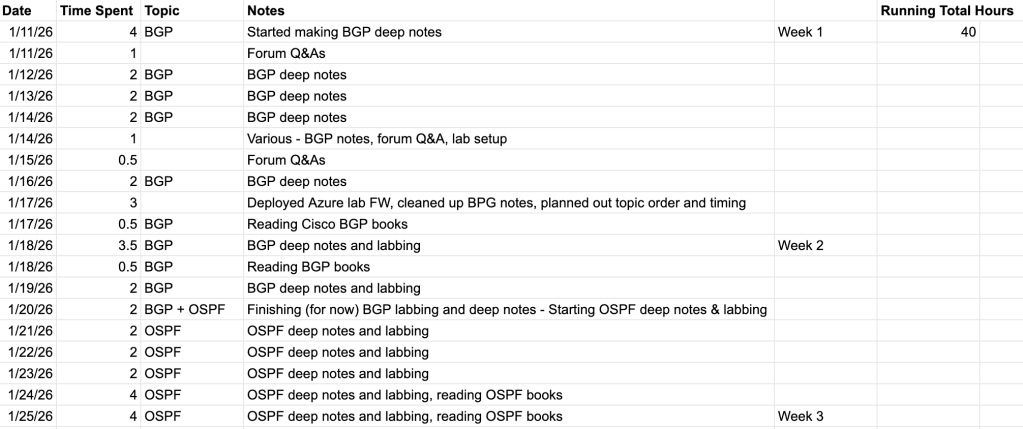
As you can see, we finished up BGP deep notes and labbing in about 1.5 weeks. To clarify, that is only dedicated study time. I just finished up reading the BGP sections of some CCIE books and do plan on reviewing BGP in a month or two. I also work with it every day at work so I don’t imagine I’ll become terribly rusty. My main concern is forgetting specific settings and configurations that I don’t use on the daily. I still haven’t broken out the Anki flashcards but think they could come in handy later in this process, just to stay fresh on definitions and use cases.
OSPF has not been bad at all. For background, I have not used or even touched OSPF in a production environment. I configured it in Cisco labs for CCNA and then studied it briefly for both CCNP and FCP/FCSS. It took me a couple of labbing hours to really crack its code in terms of actual configuration but as soon as I brought up the first adjacency and began turning things off and on and turning dials I really became comfortable and the subtopics quickly clicked. I’m sure I’ll repeat this many a times, but I can’t emphasize enough how helpful labbing is in terms of quickly understanding topics.
Lab Resources Update
I finally have an update on the questions I listed in the previous blog post. Unfortunately, but as expected, the resource I spoke with didn’t have a ton of definite answers regarding version coverage (only 7.6 vs 7.4+7.6, etc.) on the exam. I learned that Fortinet stays pretty tight lipped even internally when it comes to NSE8/FCX. My AM and SE really just worked off of the same Pre-Release Notes that are publicly available, and the SE provided some context based on his experience with the NSE8 back when he took it.
The most important things I got out of my meeting with the Fortinet team were Fortinet Developer Network access and the ability to request of evaluation VM licenses. I have logged into FDN at this point and browsed through the Hands-on-Labs but have yet to dive into them as there aren’t yet any covering routing. The labs I have access to with my FCSS cert mostly cover specific Fortinet services like SD-WAN, ZTNA, FortiNAC, etc. – which makes perfect sense. I’ll be sure to dive in soon. Regarding licenses, I request some FGT, FMG, FAZ, and FortiAuthenticator license as those are the products covered within the NSE8 Core module. When I get to the Secure Networking module I’ll be sure to request FortiNAC, FortiClient EMS, and FortiSandbox.
It’s important to me and my journey so I want to be sure to occasionally include the cost of running my lab. So far I’ve done everything with the two PAYG FGT VMs in Azure, but as their 30 day trial runs out, additional VMs are spun up, and evaluation licenses are applied, this will certainly change. Hopefully tracking all of this will help somebody out their when they consider whether to invest in server hardware to do everything virtual.
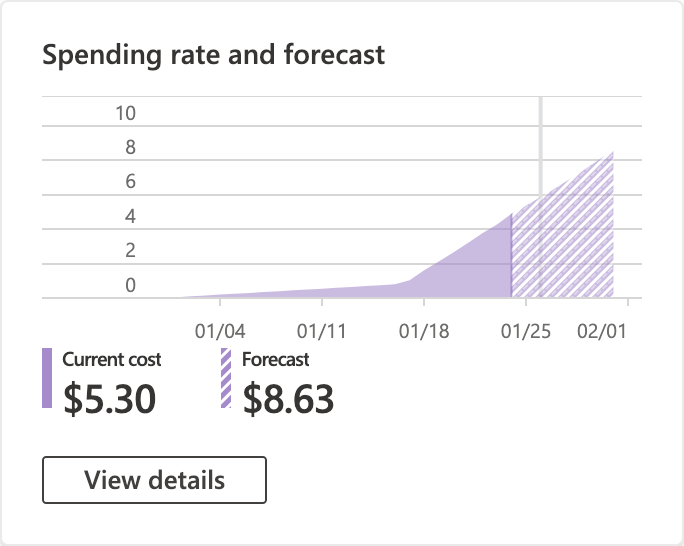
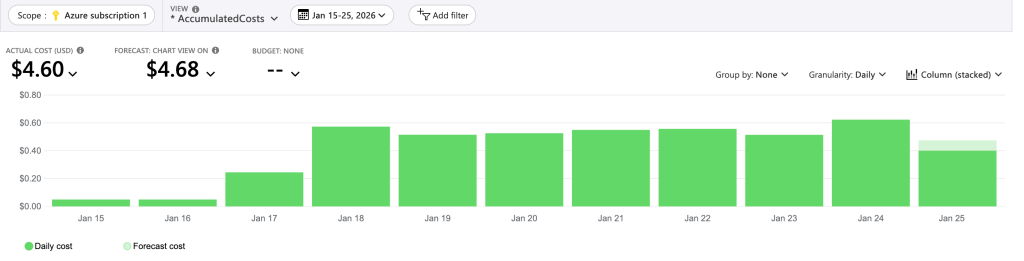
Running the two VMs about 18 hours a week, we’re averaging close to $0.50 a day. I think I’m keeping things cheap by running the smallest VMs possible and being vigilant about turning the VMs down after the end of each lab session.
Ending Thoughts
I don’t want every one of these blogs posts to be essay-length like the last one, but do I want to be sure to include anything I’ve experienced that may be helpful to the next person so I’ll end by including a quick read I found interesting on BGP: BGP in the Data Center by Dinesh Dutt
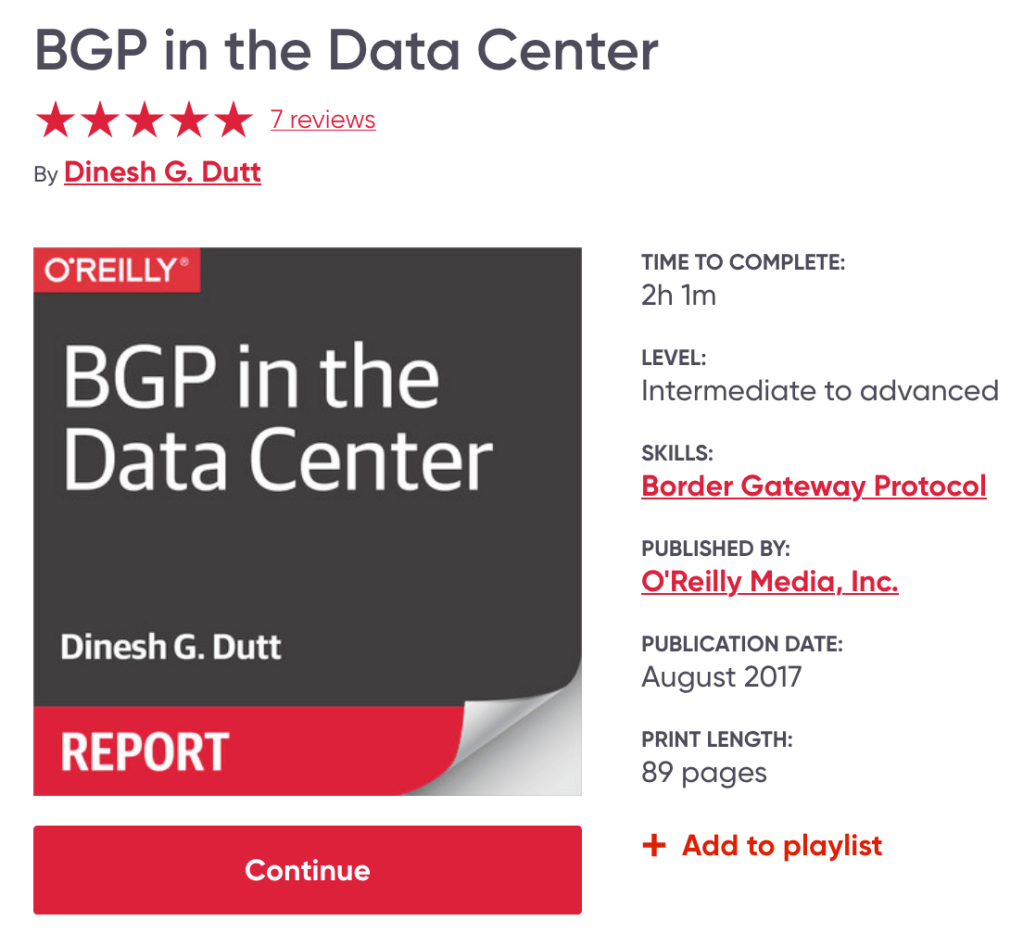
You have to sign up for an O’Reilly account to read it, but you can read it for free for the first 10 days via a preview account. It’s only about 90 pages total and provides a really good insight into how BGP is used at the hyperscale level.
Thanks and see you next week!
 NSE8/FCX Certification
Leave a comment